
A US military Apache attack helicopter crashed near the Strait of Hormuz, with its crew successfully rescued, as US President Donald Trump confidently declared an imminent 'total victory' over Iran within two weeks and a new nuclear deal, despite ongoing regional volatility and a recent de-escalation between Iran and Israel.
In a significant diplomatic development, US and Iranian negotiators have reportedly reached a tentative 60-day memorandum of understanding (MoU) aimed at extending a fragile ceasefire and paving the way for formal talks regarding Iran's nuclear programme.

The US military is considering a new wave of military operations in Iran, including potential strikes on infrastructure and securing Iran's stockpile of enriched uranium, amid a fragile ceasefire and stalled nuclear talks.
China has condemned the attack on an elementary school in Iran and pledged USD 200,000 in emergency humanitarian assistance.

Trump further alleged that Iran was behind the attacks on three vessels carrying Indian seafarers near the Hormuz Strait, which resulted in the deaths of three, despite the US Central Command having confirmed that the strikes were carried out by American naval forces, calling the incident "totally unacceptable."

The United States military killed a senior Al Qaeda-affiliated leader with direct links to the Islamic State ambush that targeted American soldiers in Syria in December in a strike carried out in the country's northwest region.

'The US was well aware of the nationality of the seafarers on board the vessels. It was not hidden. The nationality of those aboard a merchant ship is known to all the ports.' 'So, why did US shoot a missile that resulted in the deaths of the Indian mariners?'

According to Hezbollah, it fired a swarm of drones at radar sites and control rooms at the base on Tuesday, describing the move as retaliation for Israeli strikes.
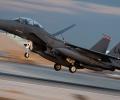
The military command clarified in a statement published on X that the aircraft were engaged in error during active combat operations on Sunday.

Amid rising tensions in West Asia following a series of strikes and counter-strikes, the United States Embassy in Muscat on Tuesday instructed its staff to shelter in place.

President Trump has been briefed on potential military actions against Iran, including strikes on infrastructure and control of the Strait of Hormuz, even as negotiations continue. He maintains economic pressure is the primary strategy, while legal questions arise over war powers.

US President Donald Trump in an exclusive interview to Axios on Wednesday, said that he would continue to keep the naval blockade until Iran agrees to deal with the United States by addressing America's concerns about the nuclear programme.

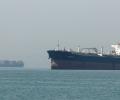
The United States has redirected 48 vessels in the Persian Gulf, particularly in the Strait of Hormuz, over the past 20 days amid ongoing enforcement actions related to restrictions on Iranian maritime assets by the US Navy.

Media reports based on intelligence sources say nearly half of Iran's missile launchers remain intact, while thousands of one-way attack drones are still part of its arsenal even after continuous strikes targeting military infrastructure over the past five weeks.

Ali Mousavi stated that such cooperation is essential for maintaining stability in the strategic waterway.

The Kuwaiti Defence Ministry said all crew members of the crashed aircraft ejected safely and were taken to a hospital for medical check-ups.

In a post on Truth Social, Trump outlined key goals of the campaign, including degrading Iran's missile capabilities, dismantling its defence industrial base, eliminating naval and air power, preventing Tehran from acquiring nuclear capability, and protecting United States allies such as Israel, Saudi Arabia and the United Arab Emirates.

The deployment could include infantry and armoured units, in addition to the 82nd Airborne Division, which is already stationed in the region.
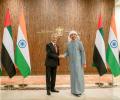
Frankly, was it really necessary in the middle of a fratricidal war for External Affairs Minister S Jaishankar to travel to Abu Dhabi for a one-on-one with the sheikh on April 12?Or, for National Security Advisor Ajit Doval to follow up on April 26? Or, for PM Narendra Modi to follow through today? There are no easy answers, notes Ambassador M K Bhadrakumar.

Iran has issued a defiant response to United States President Donald Trump's claims regarding the conclusion of hostilities, asserting that it alone will 'determine' the end of military actions against American and Israel targets.

Amidst escalating tensions in West Asia, Iran claims to have inflicted heavy casualties on US forces in Dubai, a claim vehemently denied by the US Central Command, raising concerns about regional stability.

Secretary of State Marco Rubio urged its citizens to immediately depart from several Middle Eastern countries, citing "serious safety risks."

Israel initiated military action against Iran shortly after Prime Minister Narendra Modi's visit, capitalising on a fleeting opportunity and years of strategic preparation, according to Israel's ambassador to India.

Italy has denied the United States the use of the Sigonella military base for flights heading to West Asia, citing a lack of consultation and concerns over the nature of the flights. This decision reflects Italy's stance on avoiding escalation in the region, as Prime Minister Giorgia Meloni's government emphasises its desire to stay out of war.
Trump said he is unwilling to make a deal with Tehran at this stage despite indications the country wants negotiations.

The Iranian military has asserted that its forces successfully targeted and downed a US A-10 aircraft, according to a report by Al Jazeera.

Former Central Command chief David H Petraeus suggests the US and Iran are likely to extend their ceasefire beyond the initial two-week period, citing willingness from both sides to continue negotiations.

Top government sources in India have dismissed claims that the Indian Navy provided intelligence to the US regarding an Iranian frigate that was sunk by a US submarine.

Referring to local sources, IRNA shared a video clip that it claims shows the downing of the American F-15 fighter jet in Kuwait.

This weekend, Donald Trump has begun to say the quiet part out loud -- that he wants to take control of Iran's oil, a formulation more in line with his robber-baron style of international relations.

Trump also asserted that US forces had struck hundreds of targets across Iran, including facilities of the Islamic Revolutionary Guard Corps and air defence systems.

'Strikes into the Gulf countries are proof that the security guarantees offered by the US are ineffective and that the Gulf countries cannot rely on American security assurances for their safety.'

Will rising tensions between US-Israel and Iran threaten crude oil supply through the Strait of Hormuz, putting India's fuel prices, imports, and economic stability at risk?

When missiles fly in this region, they are never just aimed at military targets.

The ceasefire is still technically holding, to the extent that no overt hostilities have been reported yet, but the rhetoric has hardened dangerously. The week ahead will also clarify whether the Islamabad failure was a negotiating tactic or whether Washington has genuinely locked itself into a position from which the only exits are climb-down, escalation, or the slow bleed of a new status quo that nobody chose and nobody controls. Prem Panicker continues his must read blog on the Iran War.
'India was not obliged to protect the Iranian ship.' 'Once the Iranian ship left Indian waters, she was on her own.' 'Guilt tripping India is wrong.'
Two United States Navy pilots ejected safely over the Red Sea after their F/A-18 fighter aircraft was mistakenly shot down early Sunday in what military officials are calling 'an apparent case of friendly fire'.

Navy officials on Monday said that the swift response by the Indian Navy's mission deployed warship INS Sumitra ensured the safe release of the hijacked vessel and its crew.

President Joe Biden and other top US leaders had been warning for days that America would strike back at the militias, and they made it clear it wouldn't be just one hit but a "tiered response" over time.

The United States has named a top air force general to head the investigations into the NATO air strike on Pakistani border posts that left 24 soldiers dead and has invited Pakistan and Afghanistan to join the probe.
